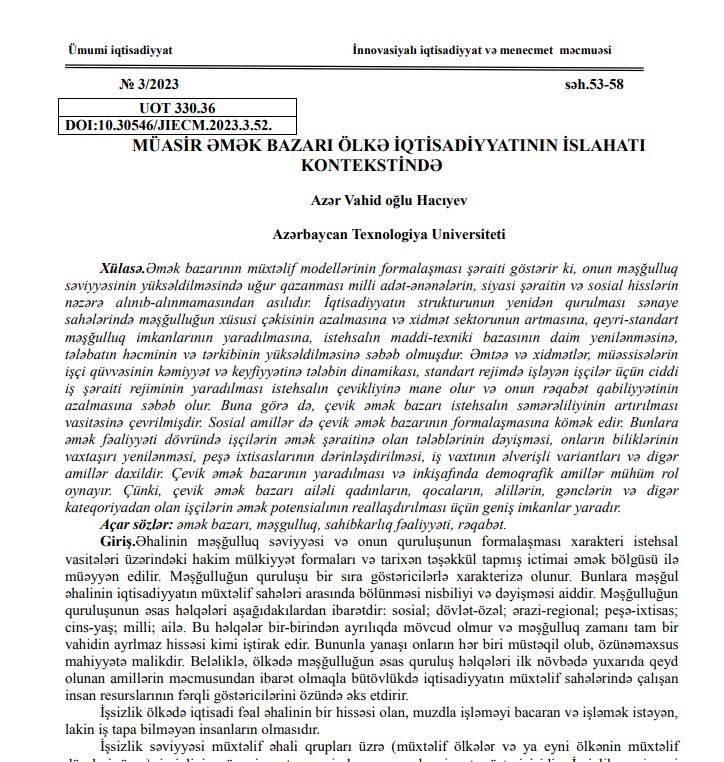
The modern labor market in the context of the reform of the country's economy
Keywords:
competition, entrepreneurial activity, employment, Labor marketAbstract
The circumstances of the formation of different labor market models show that its success in the field of increasing the level of employment depends on whether national customs, political conditions and social mood are taken into account. The structural restructuring of the economy has led to a decrease in the specific weight of employment in industrial areas and an increase
in the service sphere, the creation of non-standard employment opportunities, the continuous renewal of the material base of production, the volume and composition of the demand for goods and services, and the dynamics of the demand for the quantity and quality of the labor force of enterprises. The imposition of a strict regime on the working conditions of workers engaged in the standard regime hinders the flexibility of production and leads to a decrease in its competitiveness. Therefore, the flexible labor market has become a tool for increasing production efficiency. Social factors also contribute to the formation of a flexible labor market. These include changes in the demands of employees for working conditions during the period of employment, periodically updating their knowledge, deepening of professional qualifications, favorable working time regime options, etc. factors are concerned. Demographic factors play an important role in the creation and development of the flexible labor market. Because the flexible labor market creates ample opportunities for realizing the labor potential of married women, elderly people, disabled people, young people and other categories of workers.
References